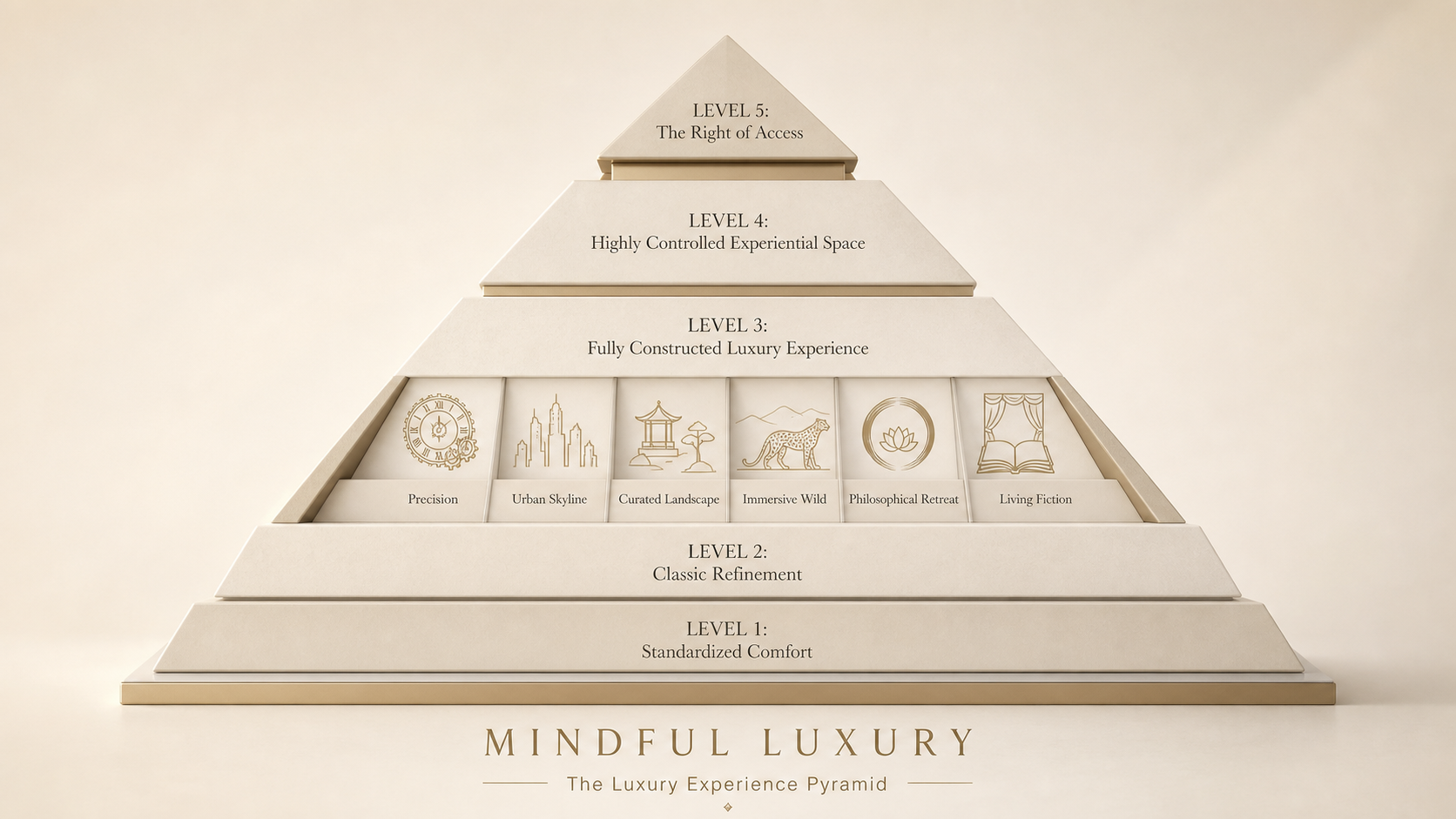
The Luxury Experience Pyramid
Over the past three years, I have stayed at more than one hundred luxury hotels around the world: from the savannahs of Singita to the sixty-million-year-old sea of sand at Wolwedans and the boulder-strewn wilderness of Zannier Sonop; from the turquoise horizons of Cheval Blanc to the lake light of Passalacqua; from a champagne breakfast at Le Bristol in Paris to a quiet cup of tea at Xitan, where mountains and clouds seem to dissolve into one another.
Different hotels create different kinds of experiences. Gradually, this has made one thing clear: luxury is not automatically determined by price. Some hotels are refined but hollow. Others are quiet and understated, yet offer a complete and deeply resonant experience. The usual ways of categorizing hotels, by geography, price, brand tier, or star rating, are not enough to explain these differences.
This essay attempts to reorganize hotel experiences through the lens of “experiential hierarchy” and to establish a more structured framework of observation: The Luxury Experience Pyramid. The pyramid consists of five levels, each representing a different degree of texture, depth, and completeness in the luxury hotel experience.
Level 1-2: Predictable Comfort, Still on the Surface
The bottom two levels of the pyramid represent the mainstream hotel experience. Most conversations about hotels remain here.
Level 1: Standardized Comfort
Clean, reliable, and stable. Most global chain hotels under groups such as Hyatt, Marriott, and similar brands fall into this category. What they offer is consistency, rather than a true experience in itself.
Level 2: Classic Refinement
The hardware is excellent, but the stay rarely changes the rhythm of your day. Many Ritz-Carlton, Park Hyatt, and Mandarin Oriental city hotels, along with numerous historic and boutique hotels, sit steadily at this level. They can satisfy, but they rarely move you.
Level 2 is a dividing line in the hotel world. One type of hotel aims to become a commercially successful high-end product: predictable, replicable, and scalable. For these hotels, reaching Level 2 already fulfills their purpose.
Another type, however, aspires to luxury but remains on the surface. It understands luxury as the accumulation of refined elements: larger rooms, better materials, swimming pools, restaurants, spas, photogenic corners. But luxury is not a checklist. It is the construction of an entire experiential system.
Level 2 is addition. Level 3 is direction.
Level 3: A Fully Constructed Luxury Experience
Level 3 is the most crucial layer of the pyramid. Hotels at this level begin to construct the guest experience through a coherent methodology. Based on the nature of the experience, they can be further understood through six archetypes: three that begin with the external world, Urban Skyline, Curated Landscape, and Immersive Wild; and three that revolve around the inner state of the guest, Precision, Philosophical Retreat, and Living Fiction.
Together, these six archetypes form the landscape of Level 3.
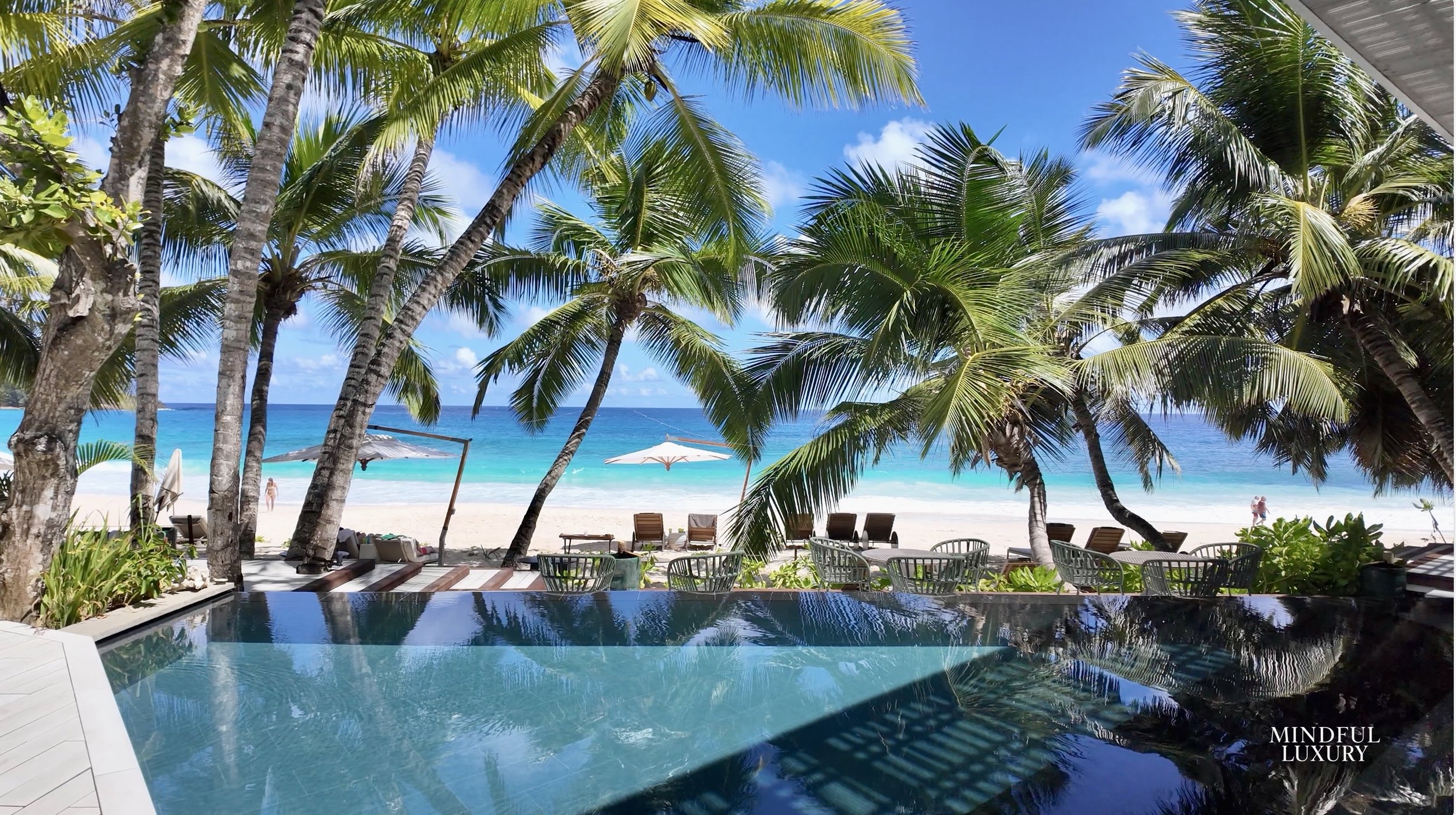
1. Precision
A highly unified brand language and an operating system as precise as clockwork. Local elements are absorbed into a predetermined aesthetic framework. The experience is stable, polished, and consistently excellent across destinations.
Examples: Cheval Blanc, Bvlgari Hotels.
Core idea: peace of mind through absolute order
Source: Cheval Seychelles
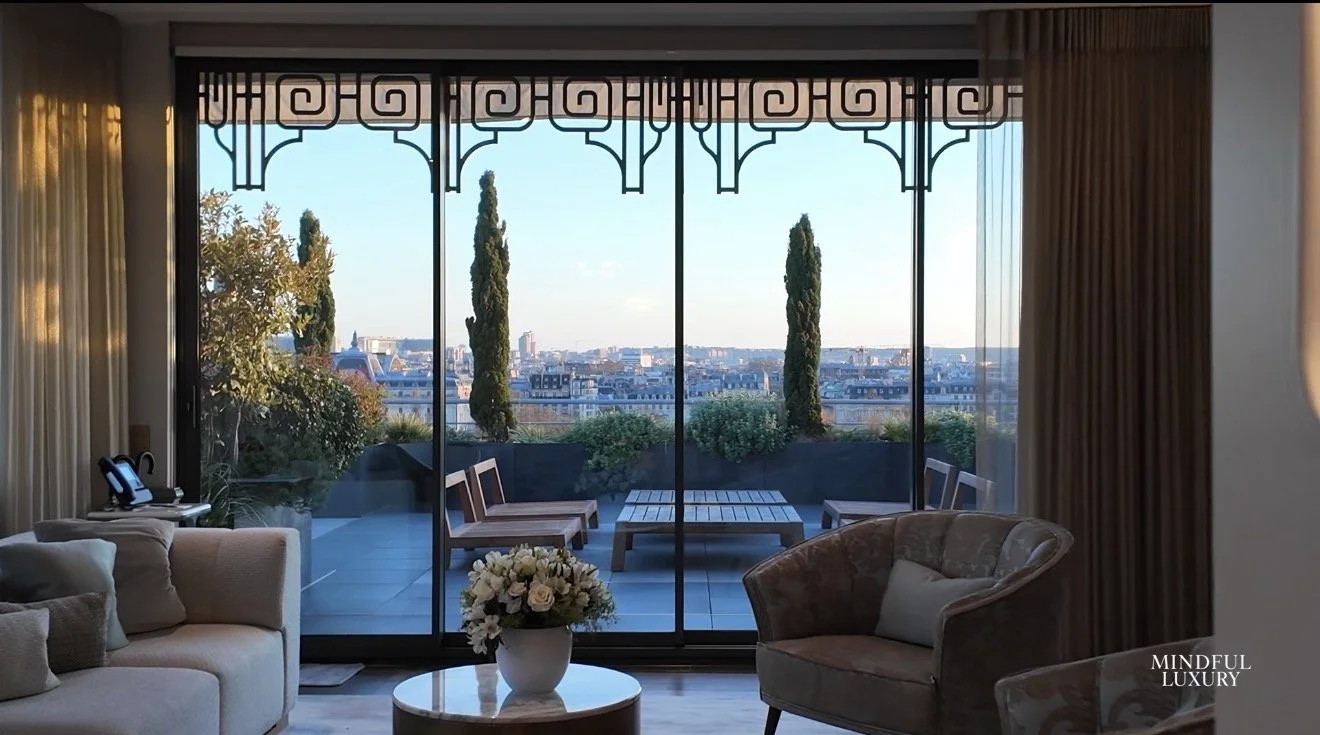
2. Urban Skyline
Located in world-class cities, these hotels create a sense of subtle separation and elevated perspective through rare addresses, vertical height, and dense access to cultural and urban resources. Height brings breadth, and with it a new way of seeing the city.
Examples: Aman Tokyo, Le Meurice Paris.
Core idea: height becomes perspective, and perspective becomes power.
Source:Le Meurice President Suite
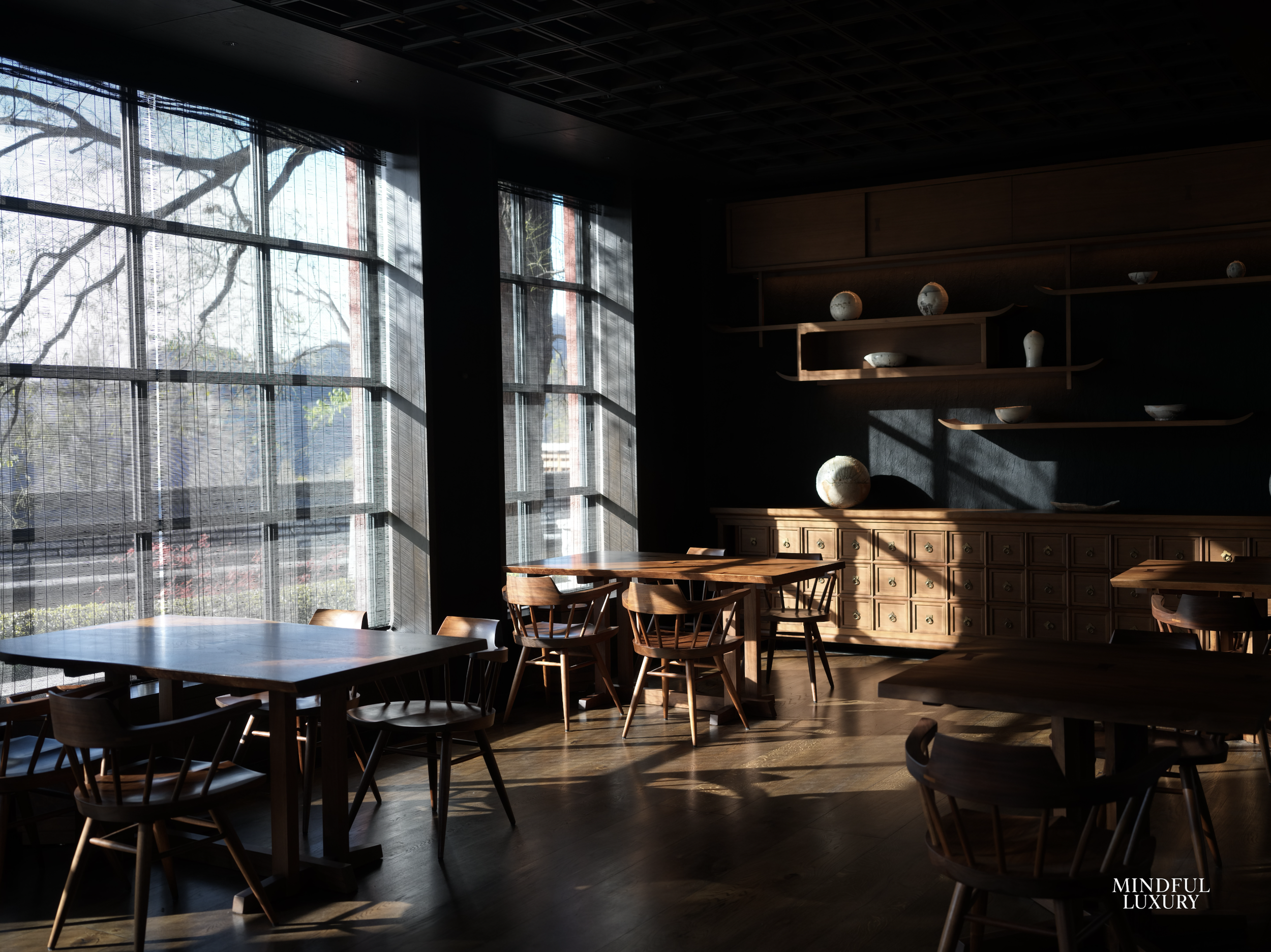
3. Curated Landscape
Nature and culture are distilled into a highly refined landscape. The hotel itself becomes the scenery. Architecture, gardens, water, and spatial movement are carefully composed, condensing and elevating the beauty of a place.
Examples: Amanzoe in Greece, Passalacqua in Italy, Xitan in Beijing.
Core idea: to stay inside a landscape that has been carefully refined.
Source: Xitan BeiJing
4. Immersive Wild
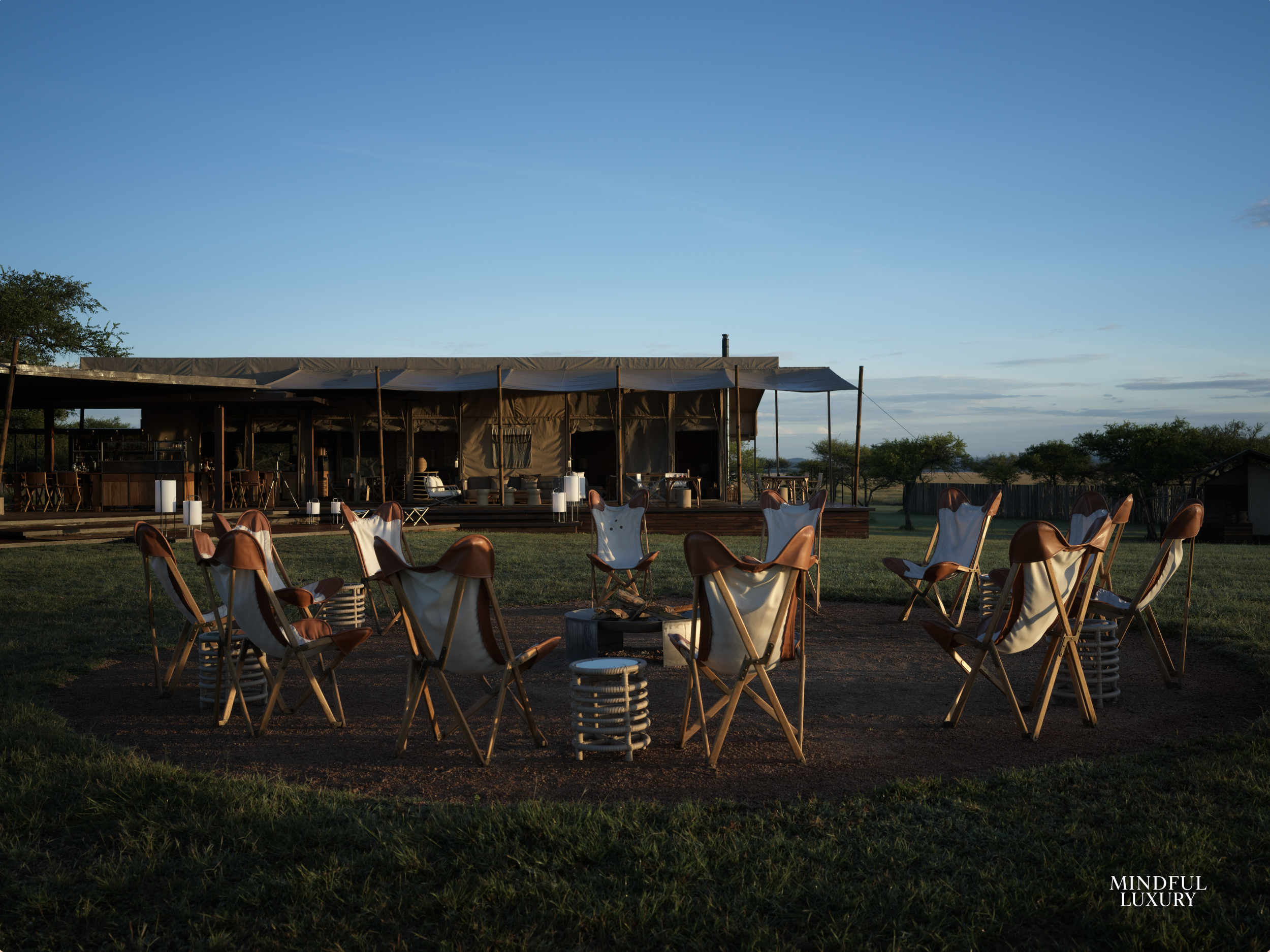
This is not so much staying at a hotel as falling into a raw opening in the world. Nature is the absolute protagonist. Endless horizons and ancient silence allow one to sense, once again, the position of the self within the universe.
Examples: White Desert in Antarctica, Singita in Africa, Wolwedans in Namibia, Awasi in patagonia.
Core idea: to feel the eternal beyond the human world.
Source: Singta Sabora
5. Philosophical Retreat
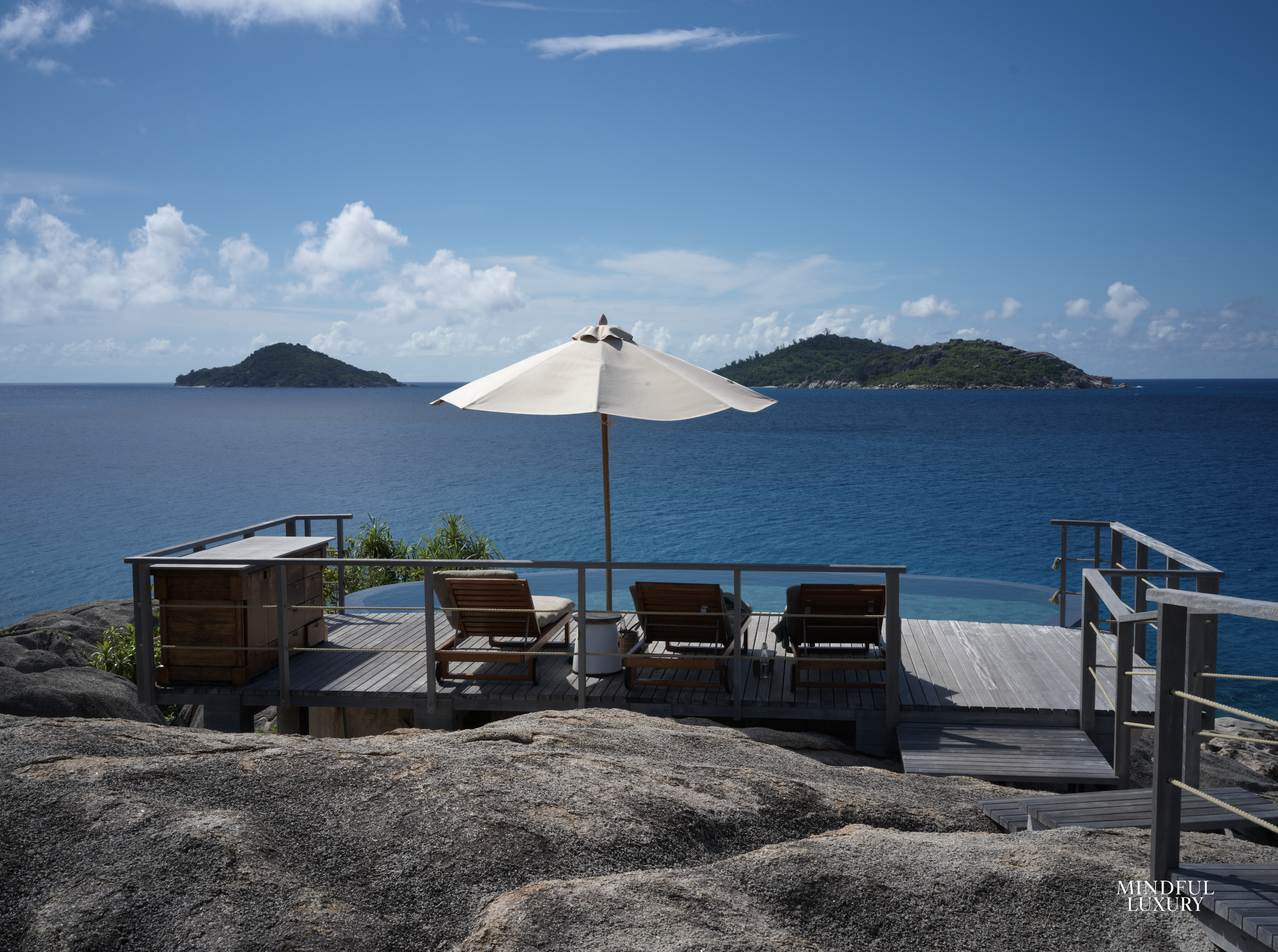
Built around a philosophical or spiritual foundation, these hotels create a field of clarity through spatial philosophy and systems of restoration. They guide the guest away from external noise and back toward the inner self.
Examples: flagship Aman resorts, flagship Six Senses resorts.
Core idea: self-restoration within a field of energy.
Source: Six Senses Seychelles
6. Living Fiction
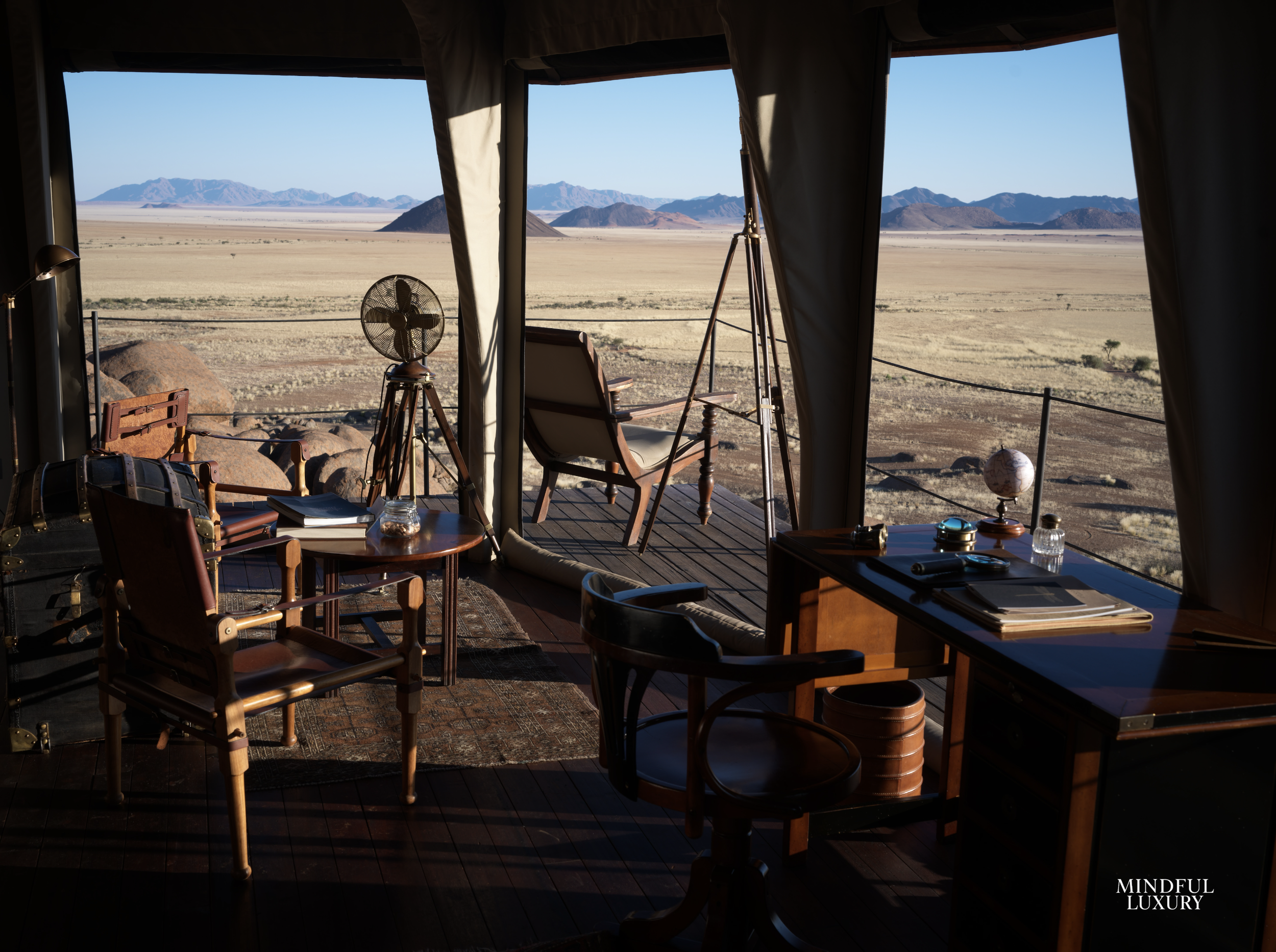
The hotel becomes a stage. Through intense period decoration, objects, and spatial arrangement, it invites the guest to step temporarily out of reality and into a specific era or narrative. The real story is completed in the imagination.
Examples: Zannier Sonop in Namibia, Le Bristol Paris.
Core idea: to imagine another life inside a story one can inhabit.
The key to Level 3 is that luxury is no longer a simple accumulation of refined elements. It becomes an experiential system with texture, depth, and completeness. For most luxury travelers, Level 3 is the most worthwhile level of investment. Here, the experience has direction, and therefore the possibility of being remembered.
Source: Zannier Sonop
Level 4: A Highly Controlled Experiential Space
At this level, what is being purchased is no longer simply a hotel, but the ability to control environmental variables almost completely. Private camps, such as Singita Milele or Airelles Le Chalet 1946, private voyages, private islands, and similar experiences all derive their value from extreme privacy and near-total absence of interference.
The essence of Level 4 is this: “I want the world, when I need it to, to make room for a space that belongs entirely to me.”
This expensive form of silence can sometimes exceed Level 3 in depth. Yet its cost is the loss of that small but meaningful element of randomness that comes from contact with the real world.
Level 5: The Right of Access
The threshold of Level 5 is never money alone, but power. Its value lies in the mode of entry: places accessible only through particular identities, social fields beyond ordinary reach, or a room inside a presidential residence that cannot simply be booked.
Level 5 represents the right of access that cannot be easily purchased.
Conclusion: Structure Makes Luxury Legible
The purpose of the Luxury Experience Pyramid is not merely to place new labels on hotels. Its value lies in offering a clearer way of seeing, making the complex world of luxury hospitality more legible.
Luxury is not accumulation. It is texture, depth, and completeness of experience. In the end, what becomes visible is not only the hotel itself, but also the inward space and rhythm we find within it.
This is the beginning of Mindful Luxury: a more conscious way of choosing, one that leads toward inner stillness and openness.